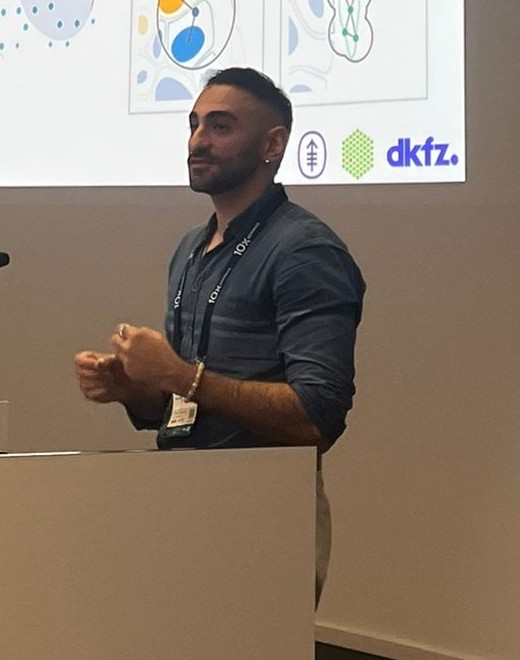
Elyas Heidari
PhD researcher · DKFZ & EMBL, Heidelberg · finishing Sept. 2026
the subconscious
“Until you make the unconscious conscious, it will direct your life and you will call it fate.”
— C. G. Jung
AI/ML
Bioinformatics
MLOps
Programming
Spoken
I am a PhD researcher in AI for Biology, in Oliver Stegle’s and Moritz Gerstung’s labs. I’m interested in scalable, academic-budget AI, and in realist evaluation: whether a method survives contact with real biological data, which most AI doesn’t. So I care less about how fancy an architecture is than whether it works: whether it’s accurate and fast enough that people use it. That’s what the benchmarks and metrics I build measure, and why I still run the single-cell and spatial analysis by hand.
My main project, Segger, turns cell segmentation into link prediction on a graph and assigns 30 million transcripts in about 10 minutes, roughly 1,000× faster than the tools before it; it’s the tokenizer the spatial foundation models above it are built on. I’m now building one of those, Laminar: a self-supervised model that maps a tumour into a cross-scale embedding field, an AlphaEarth for tissues rather than the planet, trained on 50 billion transcripts and 500 million cells at the German Cancer Research Center.
Before Heidelberg, I did a double bachelor’s in computer engineering and mathematics at Sharif University of Technology in Tehran; there I worked with Ali Sharifi-Zarchi and built MUVis. I then did a master’s in computational biology at ETH Zürich, where my thesis won the ETH Medal. Along the way: a summer at EMBL with Wolfgang Huber, where I built scPotter; single-cell pipelines with Mark Robinson in Zurich; and SageNet with John Marioni and Shila Ghazanfar at the Cancer Research UK Cambridge Institute.
Selected work
Segger
Cell segmentation as a graph problem: the tokenizer for spatial foundation models.
Cell segmentation is the rate-limiting step in spatial transcriptomics: which transcript belongs to which cell. Segger reframes it as link prediction on one big heterogeneous graph and assigns 30 million transcripts in about 10 minutes, roughly 1,000× faster than the tools before it. Those cells become the tokens the foundation models above them are built on. Under revision at Nature Methods.
A collaboration with Andrew Moorman and Dana Pe’er’s lab at MSK.

SageNet
Putting dissociated cells back where they came from.
When you dissociate a tissue to sequence it, you lose where each cell sat. SageNet learns that lost position by building a graph over a gene-interaction network, then reconstructing the mouse embryo during gastrulation from seqFISH. It was my master’s thesis, and it won the ETH Medal.
Selected publications
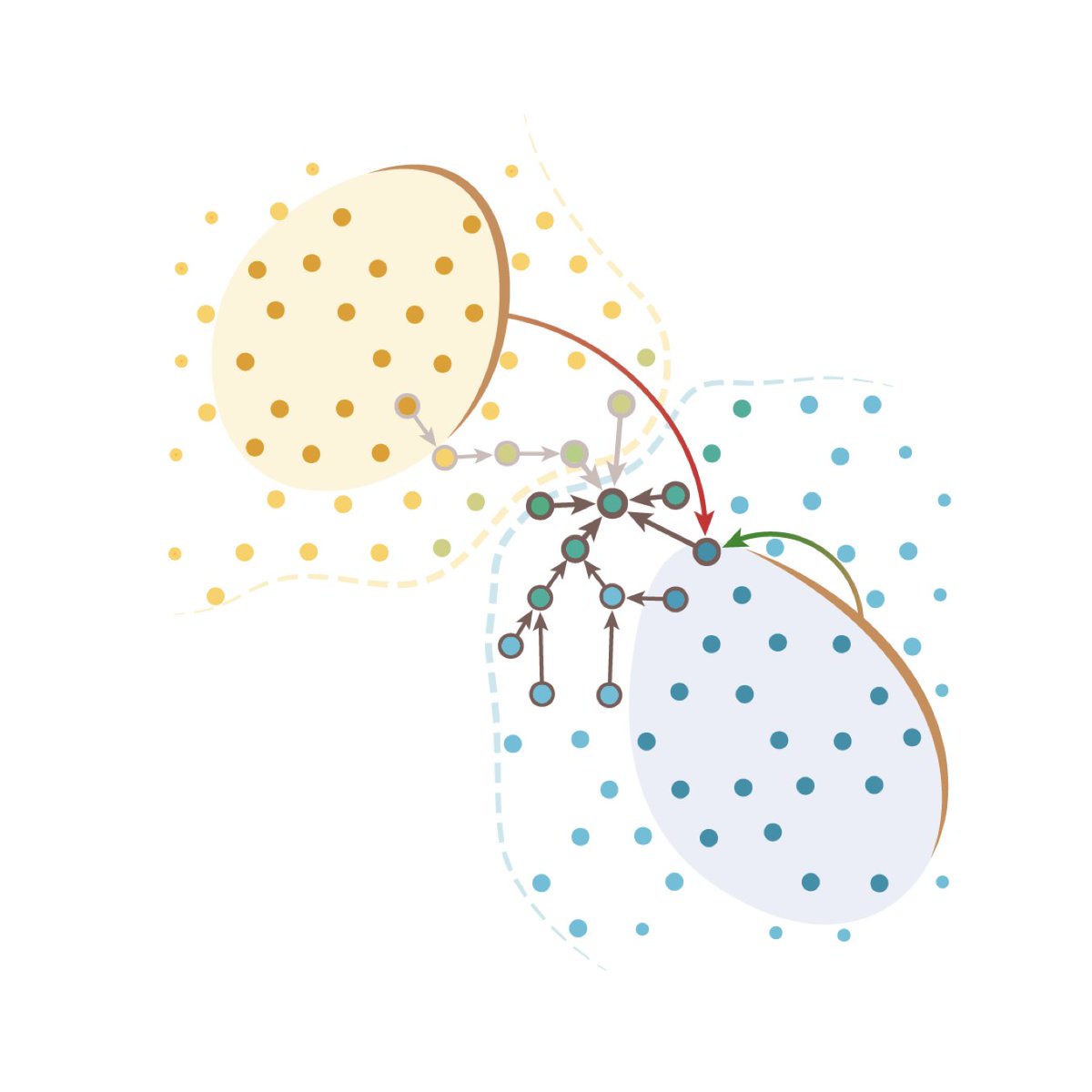
Segger: Fast and accurate cell segmentation of imaging-based spatial transcriptomics data
Heidari, E.*, Moorman, A.*, Unyi, D., et al.
bioRxiv 2025 · Under revision at Nature Methods.
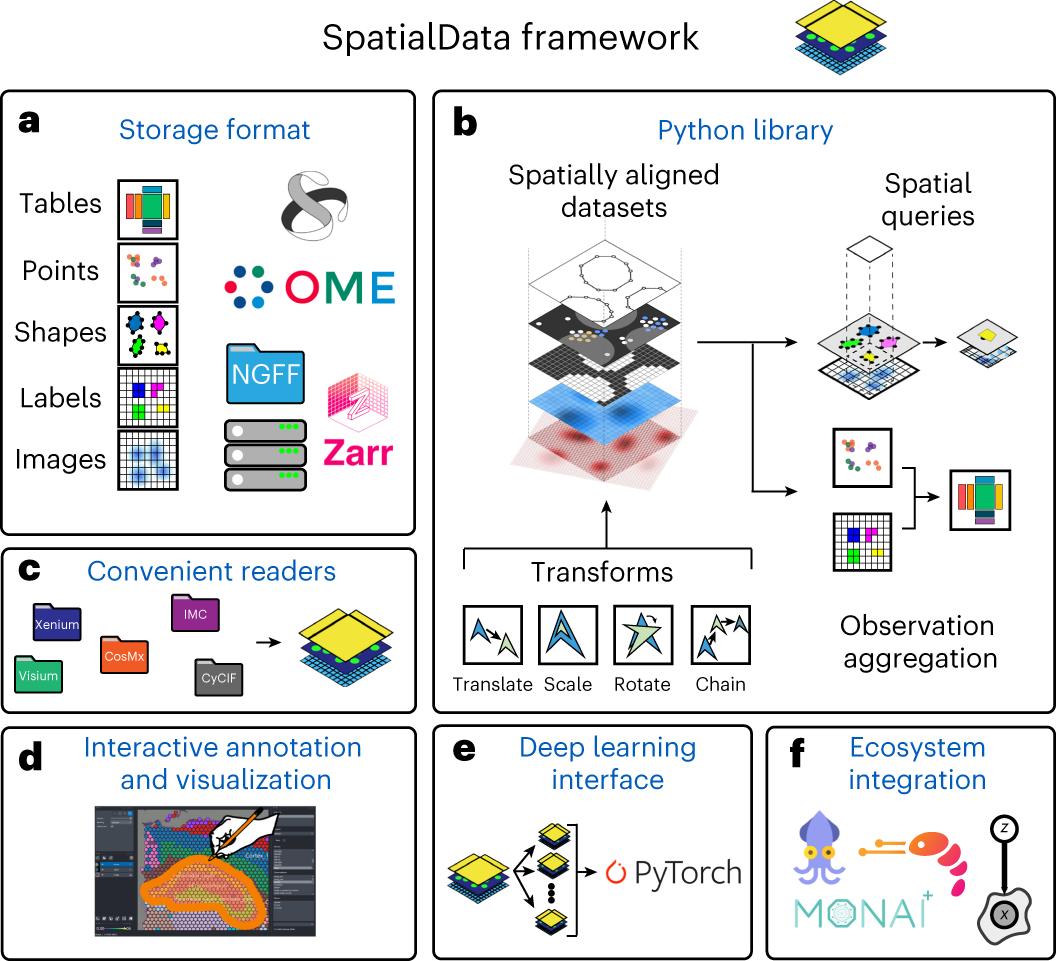
SpatialData: an open and universal data framework for spatial omics
Marconato, L.*, Palla, G.*, …, Heidari, E., et al.
Nature Methods 22(1):58–62 2025
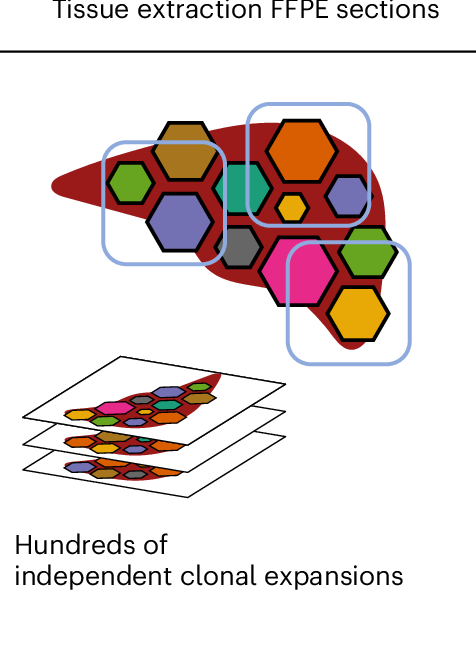
Integrated in vivo combinatorial functional genomics and spatial transcriptomics of tumours
Breinig, M.*, Lomakin, A.*, Heidari, E.*, et al.
Nature Biomedical Engineering 2025
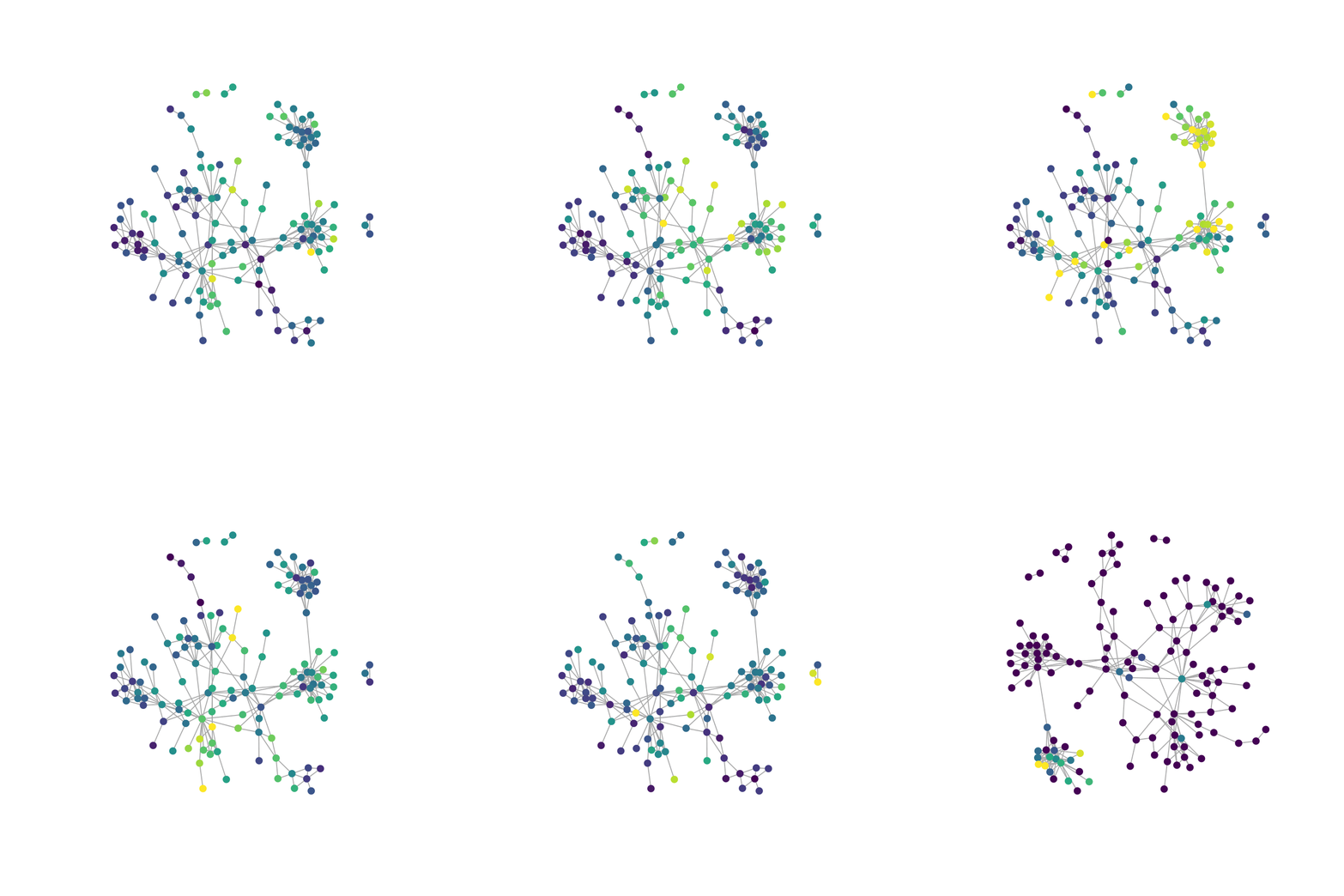
Supervised spatial inference of dissociated single-cell data with SageNet
Heidari, E., Lohoff, T., …, Ghazanfar, S.
bioRxiv 2022
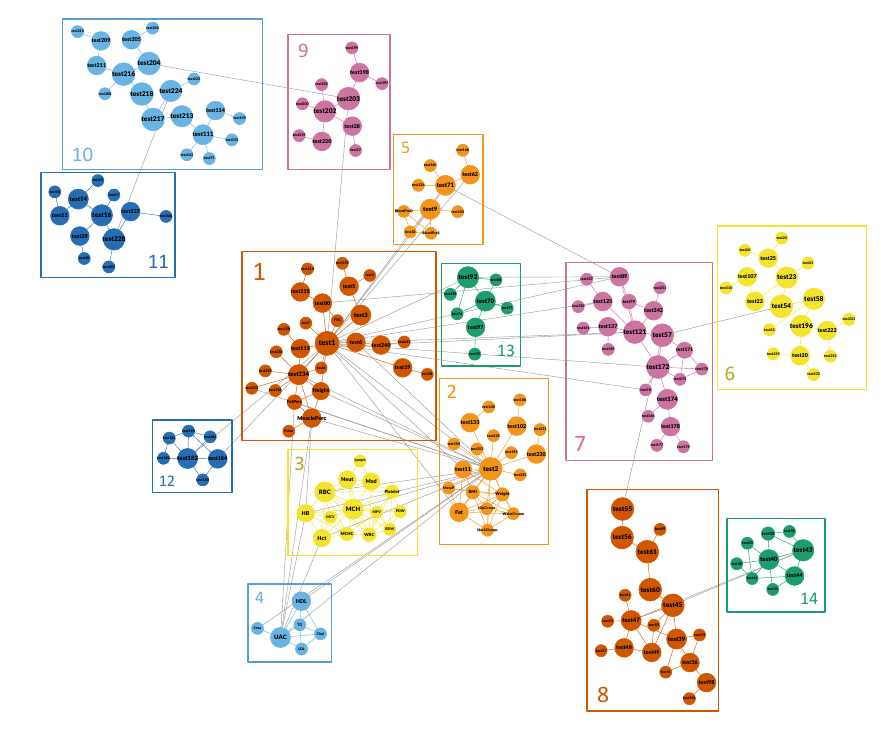
A recurrent random walk


DKFZ & EMBL Heidelberg
PhD, Stegle & Gerstung labs
Structured representation learning for large-scale spatial omics. Segger came out of this, and now Laminar. I contribute to scverse, mainly SpatialData.



ETH Zürich · UZH · EMBL-EBI
MSc, Computational Biology & Bioinformatics
A master’s in computational biology at ETH (5.76/6.0, top three), single-cell pipelines in Mark Robinson’s lab in Zurich, and a fellowship year in John Marioni’s lab in Cambridge where SageNet came out.
EMBL Heidelberg
Research trainee, Huber group
A summer in Wolfgang Huber’s group and my first taste of single-cell data. Enough to decide the rest.
Sharif University of Technology, Tehran
BSc CE & Applied Mathematics
Where a lot of this started, and where I first got into graphs. Head TA for advanced programming and probability & statistics, founded Sharif DataDays, wrote MUVis on the side.
Writing
2026-02-05
Why Picasso Made 147,000 Things (And Why You Should Too)
The exploration-exploitation trade-off in creative work: why volume is the only variable you control in the pursuit of masterpieces.
2026-02-02
Bioinformaticians' Tale: From Pipeline Plumber to Architects of Agentic Bot-Labs
A 2026 hot-take on the future of bioinformatics: as AI agents orchestrate entire experimental loops, the role of the scientist shifts from pipeline builder to architect of discovery.
Contact
Want to talk, think together, or code together? I’m always up for it. Email is the surest way to reach me.
I grew up in Mashhad, in northeastern Iran, the city of saffron, and my family comes from the small village of Dastjerd. Iran is always in my heart, and I think it shows: in how much I care about science and education, and in my weakness for a colorful figure.